Why Storytellers Matter
An international branding expert explores the value of authentic storytelling and how it informs the practical world
Not long after we crawled out of the primordial ooze and discovered fire, human beings began to tell stories. We started painting on cave walls to document our lives, and as our brains and soft palettes developed, we told stories. Eventually, we learned to draw pictures of the sounds we made and began to write our stories down.
We told stories to explain the world around us, where we had come from, where we were headed, and why we were here. From this humble beginning, we branched out to religion, science, history, art, and literature. Early scholars were the healers and storytellers among us who were capable of decoding the world around us.
The world of religion, science, history, and literature was all one, indistinguishable from another. How could you understand the meaning of life without knowing where you had come from and where you were going? How could you transfer this information to the tribe without telling them a story they could understand and pass down?
Breathing Meaning Into Life
The word inspire, from the Latin inspirare, meaning “to breathe or blow,” which itself is from the word spirare, meaning “to breathe.” The Latin spiritus, meaning “breath,” came to define the more ethereal spirit, whether man, fish, bird, or moon.¹ Inspiration, therefore, was nothing less than breathing life into something to transform it into something new.
The ability to inspire was paramount to early civilization and was not deemed a frivolous form of entertainment. Merely having the skill to hunt did not give the hunter insight into the nature of human existence and its place in the larger natural world. It was the storyteller who saw the connection between the hunter and the elk and breathed life into the stories that would sustain the tribe. It was the storyteller who made it all make sense.
Even in our more nomadic days, there were experts in their fields, craftsmen, and specialists who were considered the best at their particular skill. But the storytellers were the ones who wove the practical elements of everyday life into the broader narrative of meaning.
Storytelling In The Modern World
Too often, we think of stories and storytelling as the work of novelists. Made up tales of intrigue, comedy, tragedy, sorrow, or drama. But there isn’t a field, discipline, or industry operating today where storytelling doesn’t have an impact.
Whether it’s professional sports or a high-tech startup, a scientific discovery, or a political campaign, stories are what give facts meaning. We don’t just explain what happened, but why it’s important. No one reports the results of an experiment without providing context for why it matters. Stories give the details substance.
In most cases, it is not the experts that we hear from, because their expertise lies not in telling stories, but in whatever their field happens to be. We learn from the storytellers because they are the bridge between the facts and the meaning. Law, medicine, science, business, or politics: there are those in the trenches, doing the work their expertise entails. But it is the storytellers who take it from niche obscurity to common knowledge.
The Shortcomings Of Journalism
All writers are journalists of sorts, but not all journalists are writers. In our modern ideal of the objective journalist, their job is to report the facts, not provide opinion or meaning. It is the writer who gives us the perspective that allows us to appreciate the relevance. It is the writer who gives us the context to know how to feel about it. It’s why newspapers have editorials and why Rachel Maddow has a platform.
This is in no way a slight on journalists. Their job is to research, investigate, interview, and observe to report back on what they have learned. This is critical, important work. But objective journalism, to the extent that such a thing exists, is meant to be without emotion, prejudice, or opinion. This is great if you want the facts, but not all that helpful in effectively informing an often-overwhelmed society.
There are those today who believe that being a professional journalist is itself a measure of expertise, and that’s true. But an expert in what? What makes a political reporter an expert in politics? Is it a degree in political science, previous work experience in government, or simply years of experience writing about politicians and public policy?
The Value Of Being A Generalist
I am considered many things in my line of work. Director. Designer. Consultant. Expert. But the fact remains that, essentially, I am a writer, a raconteur, a storyteller. The nature of my job is to distill complex subjects into simple-to-understand narratives.
By definition, I am a generalist as I require a broad knowledge of culture, history, science, politics, and psychology in order to understand the human experience. It’s not at all helpful for me to know a lot about any one thing. I need to know a little about a lot of things.
My ability to transform facts and figures into memorable stories is my expertise. I rely on other experts to inform my understanding, so I can explain their truths to a larger audience who don’t have the time, inclination, or expertise to do the research themselves.
I’ve been writing about the human experience for over thirty years, which should make me an expert on something, but what? Vocationally, I make my living telling stories for money. Large corporations pay me to make their products emotionally relevant and relatable to consumers. In order for me to do my job effectively, I have to understand what motivates consumers. I have to understand how they feel and what causes them to act.
Even back in the first golden age of advertising, when product benefits were full of false promises, dubious claims, and hyperbolic exaggerations, they told stories to set the stage for their dramatizations. In today’s much more cynical environment, it’s rare that anyone can rely on features to sell a product; rather, we focus on benefits. It’s not what the product does that is important, but how it makes you feel.
The Business Of Storytelling
While many might still be under the delusion that we make decisions intellectually, the research has shown that emotion is the driver when it comes to making decisions.² Remove the notion of how we feel about something, and we are left with an interminable number of options, making it impossible to choose. The sheer number of options paralyzes us.³
Professional athletes, politicians, musicians, actors, corporations, lawyers, architects, scientists, and businessmen all use storytelling to create effective narratives to communicate with a larger audience. We create heroes and villains, excuses and rationales, to lead the consumer to a place of trust.
The lawyer will tell you that their client is innocent because that is their job. But for us to trust them, they must tell us a story we find credible and believable. We think of actors as being experts in transforming themselves into the objects of our desire, but if you don’t think that’s what CEOs are doing to influence their stock price, you really misunderstand the nature of business.
The Function Of A Storyteller
The author Spencer Holst tells the following story:
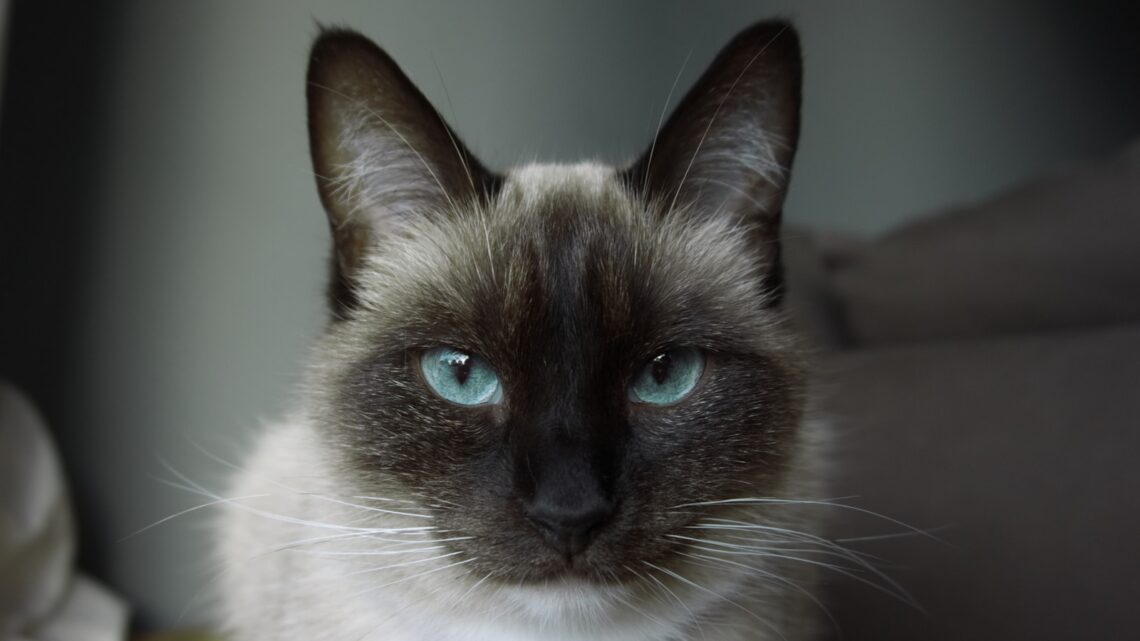
Once upon a time, there was a Siamese cat who pretended to be a lion and spoke inappropriate Zebraic.
That language is whinnied by the race of striped horses in Africa.
Here now: An innocent zebra is walking in a jungle, and approaching from another direction is the little cat; they meet.
“Hello there!” says the Siamese cat in perfectly pronounced Zebraic. “It certainly is a pleasant day, isn’t it? The sun is shining, the birds are singing, isn’t the world a lovely place to live today!”
The zebra is so astonished at hearing a Siamese cat speaking like a zebra, why, he’s just fit to be tied.
So the little cat quickly ties him up, kills him, and drags the better parts of the carcass back to his den.
The cat successfully hunted zebras many months in this manner, dining on filet mignon of zebra every night, and from the better hides he made bow neckties and wide belts after the fashion of the decadent princes of the Old Siamese court.
He began boasting to his friends he was a lion, and he gave them as proof the fact that he hunted zebras.
The delicate noses of the zebras told them there was really no lion in the neighborhood. The zebra deaths caused many to avoid the region. Superstitious, they decided the woods were haunted by the ghost of a lion.
One day the storyteller of the zebras was ambling, and through his mind ran plots for stories to amuse the other zebras, when suddenly his eyes brightened, and he said, “That’s it! I’ll tell a story about a Siamese cat who learns to speak our language! What an idea! That’ll make ’em laugh!”
Just then, the Siamese cat appeared before him and said, “Hello there! Pleasant day today, isn’t it!”
The zebra storyteller wasn’t fit to be tied at hearing a cat speaking his language, because he’d been thinking about that very thing.
He took a good look at the cat, and he didn’t know why, but there was something about his looks he didn’t like, so he kicked him with a hoof and killed him.
That is the function of the storyteller.⁵
Storytellers Show Us The Way
We are all born natural storytellers, just as we are all born capable of expressing ourselves creatively in song, dance, art, and story. It’s only as we are forced to conform to society’s needs do most of us abandon our natural abilities. Those of us who continue to hone our craft become the voices for the rest. Our actors and musicians, artists and poets, playwrights and filmmakers. They tell our stories long after we’ve stopped telling our own.
The storyteller is responsible for allowing us to make leaps beyond our current knowledge to discover what is possible. Without storytellers, we can’t imagine a world beyond that which we already know. Without storytellers, we are confined to a world of stagnation and apathy. Innovation requires the courage to fail and to venture off into uncharted territory. It is the storytellers who light the way.
Just as intellect is useless without emotion, expertise, without the ability to communicate it, is meaningless. This is why we need writers. To bring emotional resonance to our intellectual exercises. To give the entire human experience meaning.
This is why storytellers matter.

You May Also Like

Radical Authenticity: Your Mind Makes It Real

Better Brand Engagement Through Creative Storytelling